
Technology · EO/IR tracking
EO/IR drone tracking with FusionEO-Tracking
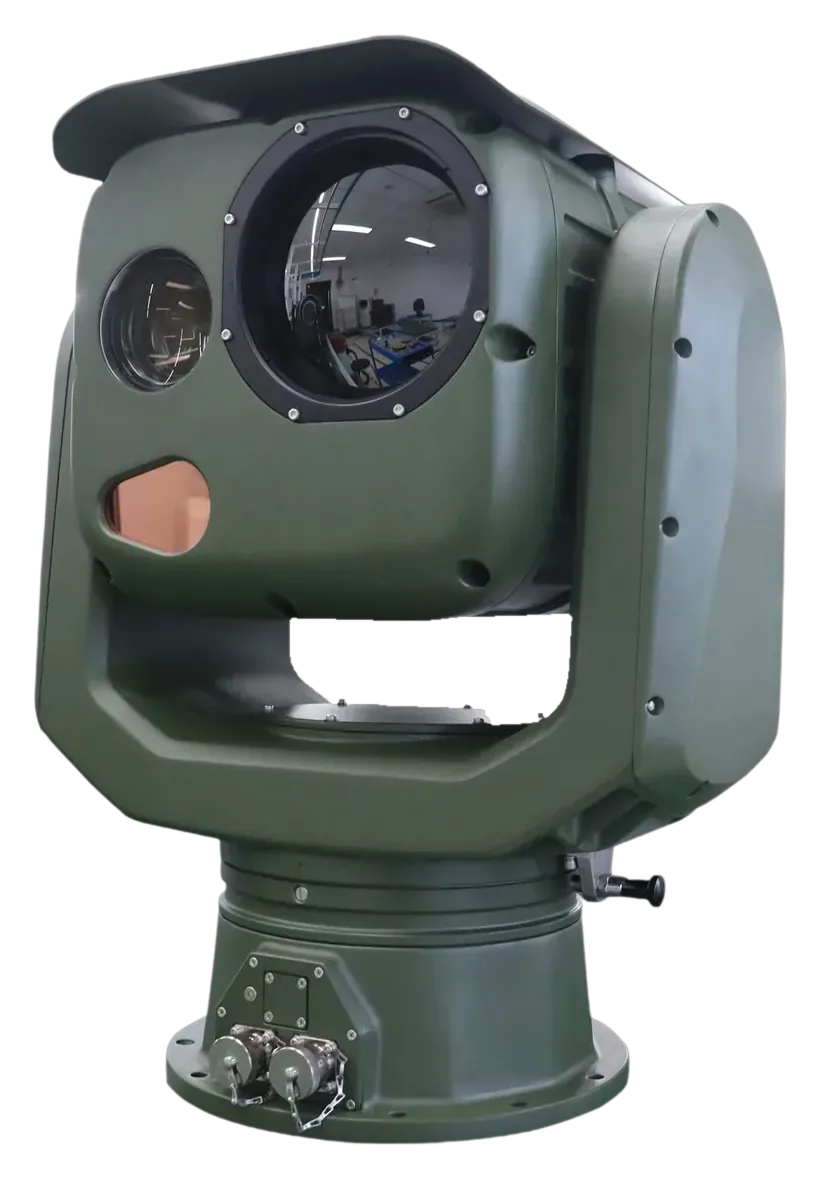
FusionEO-Tracking is the tracking function of the DD-E series EO/IR heads. It locks onto a target handed over by radar or RF, keeps it centred in visible and thermal video and helps the operator decide what it is.
How it works
What the tracker does
- Embedded hardware tracking with multi-target detection, automatic capture and anti-occlusion tracking.
- Radar cueing: the head slews to a radar or spectrum-detector track and locks on.
- Automatic zoom during tracking and adaptive tracking gates that follow target size.
- Visible and thermal video switching, target classification and behaviour alarms (regional and boundary intrusion, movement).
- Pointing accuracy from 0.02° (DD-E2) to 0.005° (DD-E5); tracking accuracy ≤ 0.5 mrad is stated for the DD-E2 and DD-E3.
What to expect
- Verification, not detection: EO/IR works best after another sensor has found the target.
- Needs a line of sight. Fog, rain, glare and thermal background all affect the picture.
- Stated working distances for a 0.3 × 0.3 m drone range from 2.5 km (DD-E2, visible) to 5 km (DD-E5, visible).
Products that use it
Capabilities above come from the product specification sheets listed here.
FAQ
Frequently asked questions
What is FusionEO-Tracking?
FusionEO-Tracking is the tracking function of the DD-E series EO/IR heads. It locks onto a target handed over by radar or RF, keeps it centred in visible and thermal video and helps the operator decide what it is.
Can EO/IR detect drones on its own?
EO/IR works best for verification after another sensor has found the target. It needs a line of sight, and fog, rain, glare and thermal background all affect the picture.
How accurate is the tracking?
Pointing accuracy ranges from 0.02° (DD-E2) to 0.005° (DD-E5). Tracking accuracy of 0.5 mrad or better is stated for the DD-E2 and DD-E3.
Discuss your project with our team.
Tell us about your site, environment and team. We reply by email.