
EO/IR tracking
EO/IR systems for drone detection and tracking
Visible and thermal pan-tilt heads that let operators see what a radar or RF sensor has found, follow it automatically and record the event. Three models cover short, medium and long range.
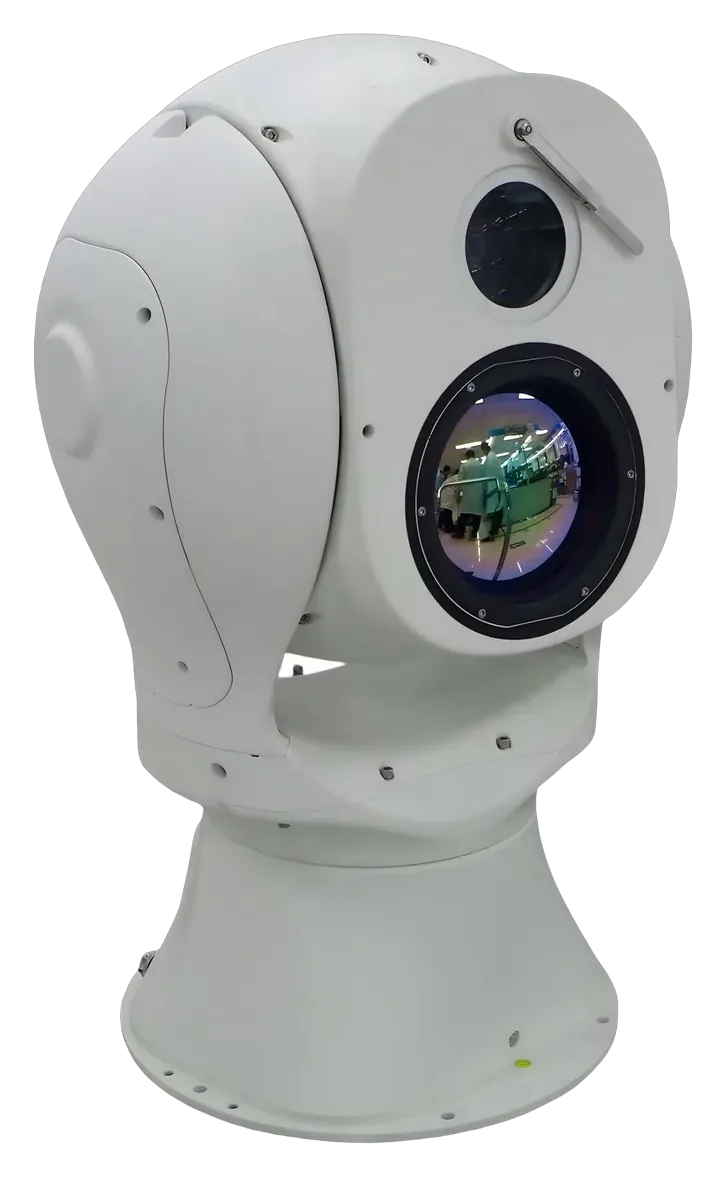
Choose by range and platform
All three combine a visible camera with an uncooled thermal imager, hardware tracking and radar cueing. Pick the head that fits the distance you must verify targets at.
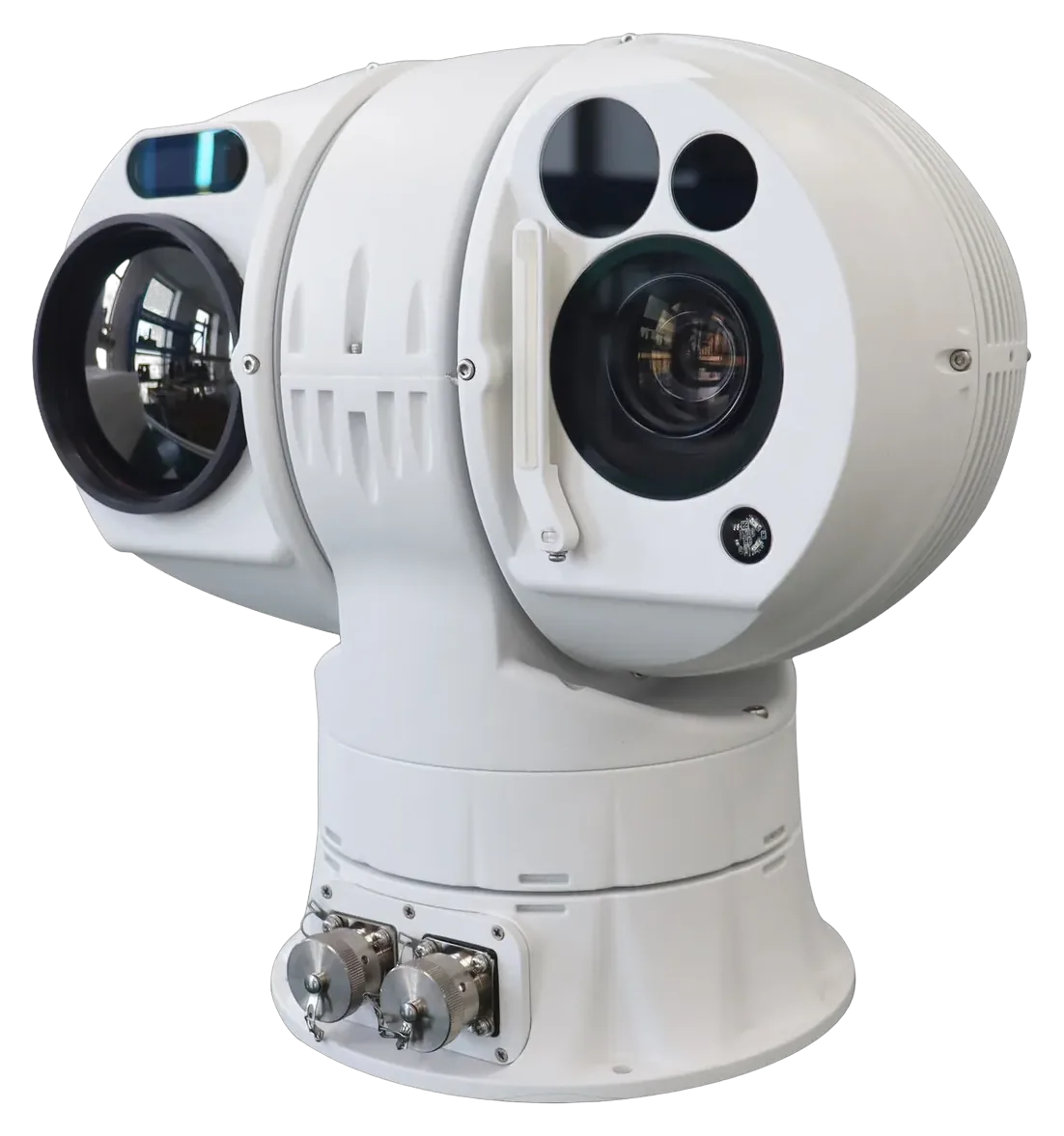
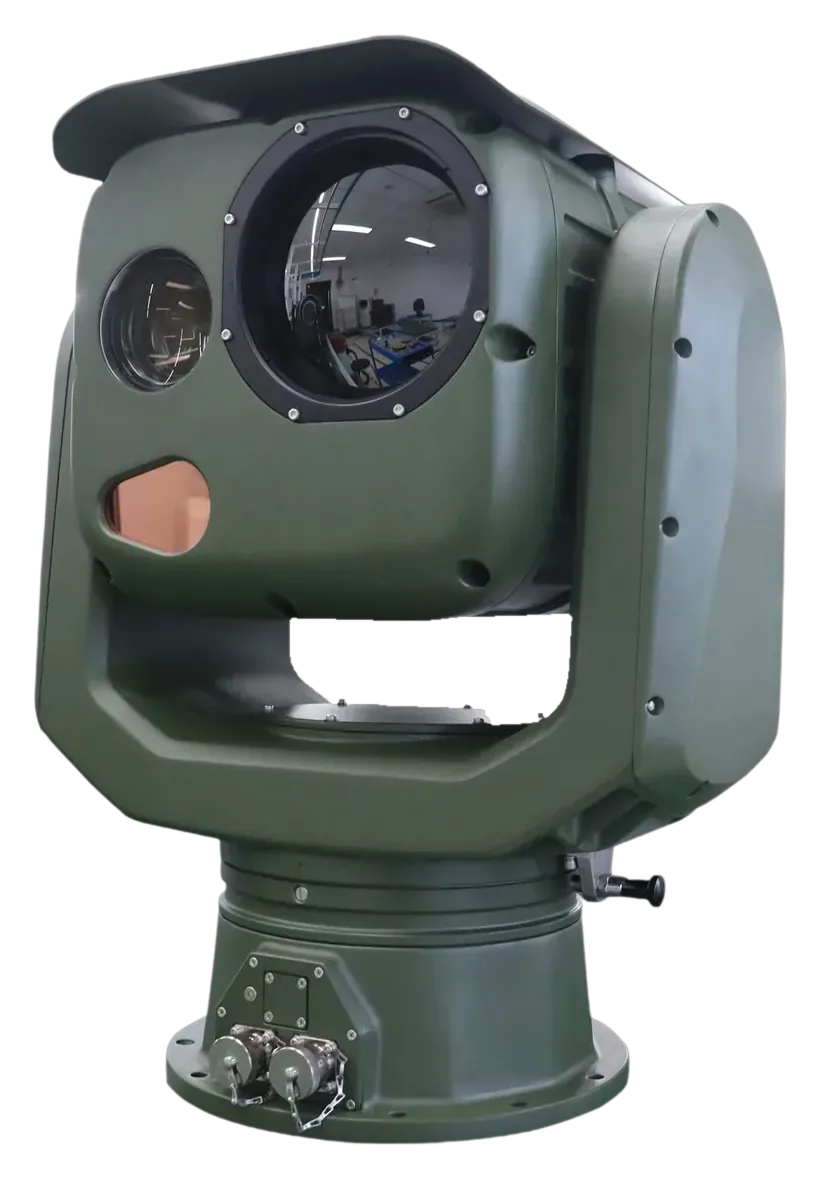
Model comparison
Working distances are for a 0.3 × 0.3 m drone under the visibility conditions stated in each specification sheet.
| DD-E2 | DD-E3 | DD-E5 | |
|---|---|---|---|
| Role | Miniature, short range | Medium range, U-shaped | Long range, spherical |
| Visible: detect / track (0.3 × 0.3 m UAV) | ≥ 2500 m / ≥ 2000 m | ≥ 3000 m / ≥ 2500 m | ≥ 5000 m / ≥ 4000 m |
| Thermal: detect / track | ≥ 1000 m / ≥ 800 m | ≥ 1500 m / ≥ 1000 m | ≥ 2000 m / ≥ 1500 m |
| Visible lens | 7–320 mm | 25–500 mm | 12.5–775 mm |
| Thermal detector / lens | 640 × 512 VOx; 100 mm prime | 640 × 512 VOx; 31–155 mm | 640 × 512 VOx; 23–230 mm |
| Rotation speed | 100°/s azimuth | 120°/s azimuth | ≥ 200°/s azimuth (max.) |
| Positioning accuracy | 0.02° | 0.01° | 0.005° |
| Pitch range | −90° to +90° | −30° to +60° | −90° to +90° |
| Protection | IP67 | IP66 | IP67 |
| Weight | < 12 kg | < 40 kg | < 110 kg |
| Power consumption | < 120 W stable / < 300 W peak | ≤ 150 W rated / ≤ 350 W peak | ≤ 150 W stable / ≤ 600 W maximum |
Source: DD-E2, DD-E3 and DD-E5 specification sheets. Effective distance depends on atmospheric transmittance, background complexity, target emissivity and weather.
Where EO/IR fits
Radar and RF sensors tell you that something is there. An EO/IR head lets an operator confirm what it is, keep a track on it while it moves and keep a video record of the event.
- Radar cueing: the turntable slews to a radar or spectrum-detector track and locks on.
- Automatic tracking with automatic zoom, multi-target capture and resistance to brief occlusion.
- Visible and thermal video switching for day, night and low visibility.
- Intrusion, boundary and movement detection, with target classification.
Read how tracking works on the FusionEO-Tracking page, or pair a head with the DD-R10 radar.
FAQ
Frequently asked questions
What does an EO/IR system do in counter-drone security?
It verifies what another sensor has found. After radar or RF detection, the EO/IR head turns to the target, tracks it in visible and thermal video and records the event for the operator.
What is the difference between the DD-E2, DD-E3 and DD-E5?
Range and size. For a 0.3 × 0.3 m drone, visible detection is 2500 m or more (DD-E2), 3000 m or more (DD-E3) and 5000 m or more (DD-E5); thermal detection is 1000, 1500 and 2000 m or more. The DD-E2 is a miniature head, the DD-E3 a U-shaped medium-range head and the DD-E5 a spherical long-range head.
Can the EO/IR heads be cued by radar?
Yes. All three support radar cueing and automatic tracking.
Which EO/IR head can be mounted on a vehicle?
The DD-E3 specification states that it suits both fixed and vehicle-mounted installation. The DD-E2 and DD-E5 are described for fixed key sites; ask us about vehicle mounting for your project.
Which EO/IR head fits your site?
Tell us the distances, mounting position and lighting conditions and we will recommend a model.