RF bearings for site monitoring
Measure the direction of supported radio signals from 300 MHz to 6 GHz with scanning from 70 MHz to 8 GHz for detection.

PASSIVE RF DETECTION · DIRECTION FINDING
DR200-TD-A combines passive RF detection and direction finding for a fixed monitoring point. It also decodes available identity and location data from supported DID/RID signals, receives compatible analog FPV video and records monitoring activity.
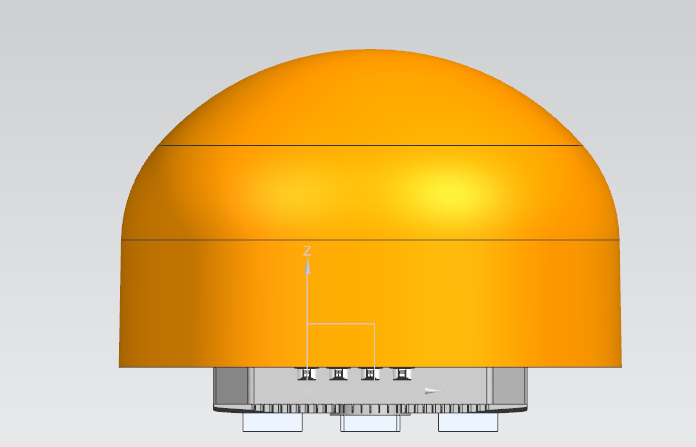 Manufacturer front-view illustration.
RF detection, bearings and supported signal decoding in one fixed monitoring device.
Measure the direction of supported radio signals from 300 MHz to 6 GHz with scanning from 70 MHz to 8 GHz for detection.
View available drone and controller data decoded from supported DID/RID signals. Availability depends on the protocol, model and transmitted information.
Receive and view compatible analog video signals within 500 MHz–6.2 GHz through the configured monitoring software.
Review monitoring alerts, GIS map information, event logs and replay through the supplied platform.
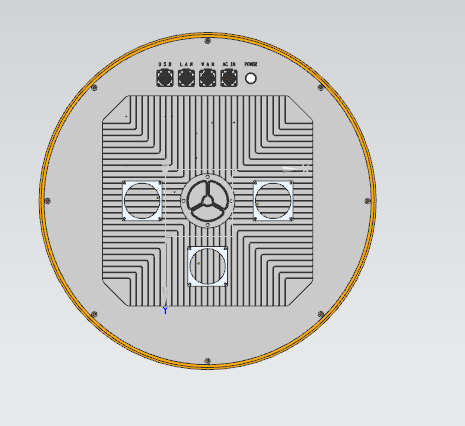
LAN, WAN and USB interfaces connect the receiver to the monitoring workstation and data workflows.
Signal acquisition and AI-assisted UAV database expansion are optional configuration items.
Manufacturer specifications for DR200-TD-A. Detection, RF bearings and decoded positions are separate functions with different frequency bands and protocol limits.
| Model | DR200-TD-A |
|---|---|
| Deployment | Fixed installation; vehicle-mounted deployment supported |
| RF detection band | 70 MHz–8 GHz |
| Direction-finding band | 300 MHz–6 GHz |
| Horizontal detection coverage | Up to 360° |
| Detection range | 5 km under manufacturer-specified line-of-sight and RF-noise conditions |
| Supported positioning protocols | DID: O2, O3, O3+, O4, O4+; compatible RID models |
| DID positioning range | O2/O4 models: 5 km; O3/O3+ models: ≥2 km, under manufacturer-specified conditions |
| RID positioning range | ≥2 km in a suburban line-of-sight environment under specified RF-noise conditions |
| Analog FPV band | 500 MHz–6.2 GHz |
| Analog FPV detection range | ≥1.5 km, line of sight, analog video transmitter power ≥2.5 W |
| Detection response | ≤5 s from drone power-on to reporting; short-range line-of-sight test, target distance ≤500 m |
| Data interfaces | LAN (RJ45), WAN (RJ45), USB |
| Power consumption | ≤100 W |
| Operating temperature | −40 °C to +65 °C; specified tolerance ±2 °C |
| Device weight | ≤16.1 kg |
| Device dimensions | 680 mm diameter × 517 mm height |
| Protection rating | IP66 |
| Signal acquisition and AI learning | Optional |
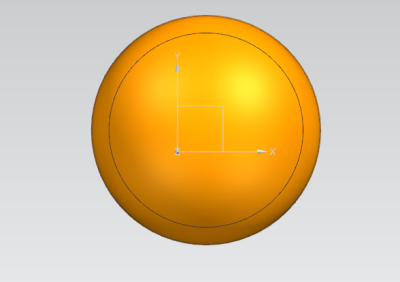
Original product illustrations from the manufacturer specification.
FAQ
It provides the bearing of a supported radio signal. Drone or controller coordinates come from supported protocol data when available; an RF bearing does not by itself provide a complete geographic position.
The specification separates 70 MHz–8 GHz detection from 300 MHz–6 GHz direction finding. Analog FPV reception is specified separately at 500 MHz–6.2 GHz.
Confirm the supported drone models and protocols, site installation, software and analog video compatibility. Signal acquisition and AI-assisted database expansion are optional.
Share the site layout, target radio signals and monitoring requirements to discuss a DR200-TD-A configuration.