Fixed Navigation spoofing Device
fixed GNSS spoofing system
Fixed Navigation Decoy Device

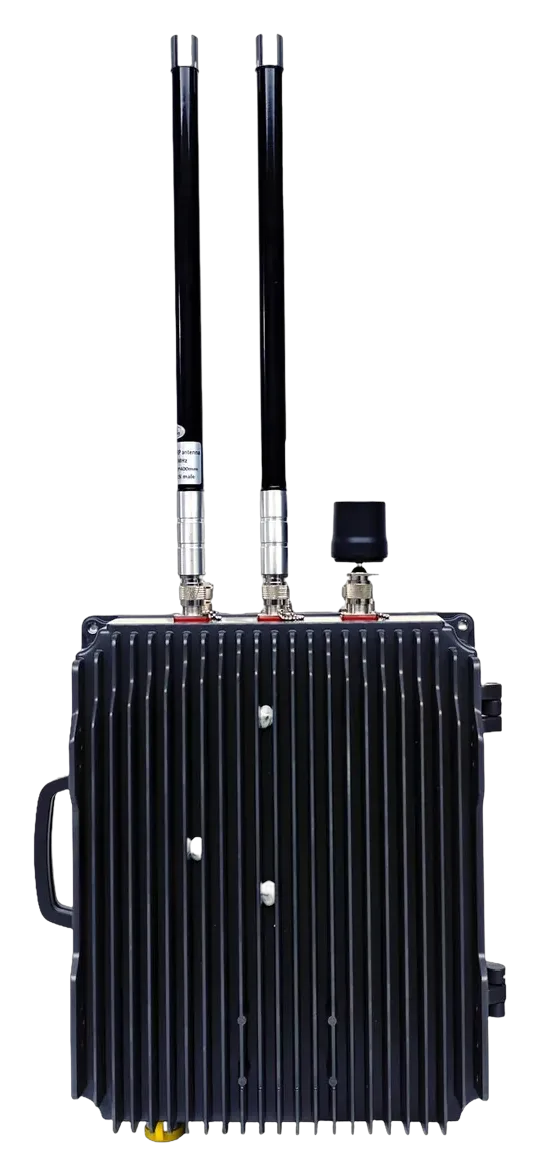
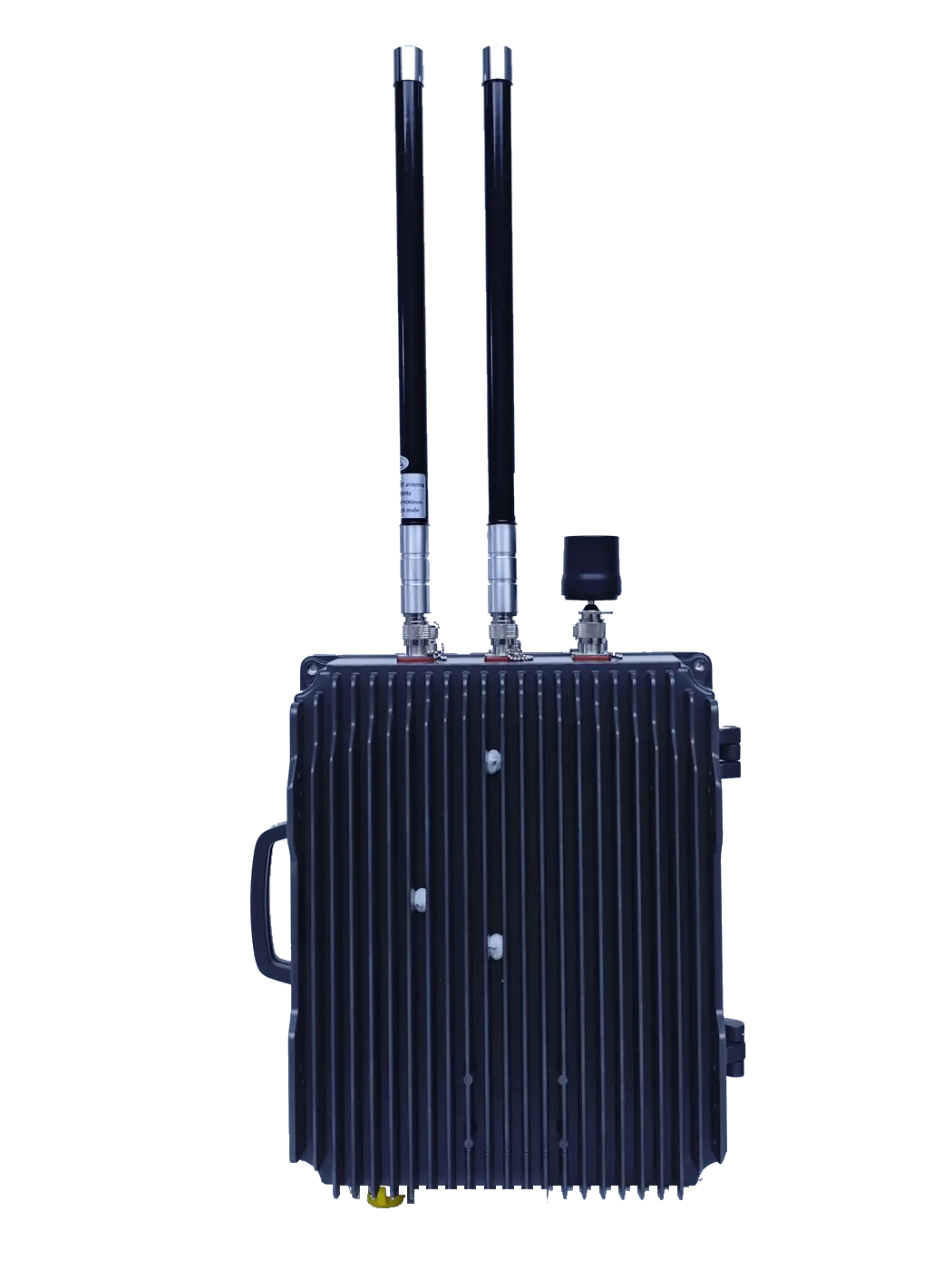
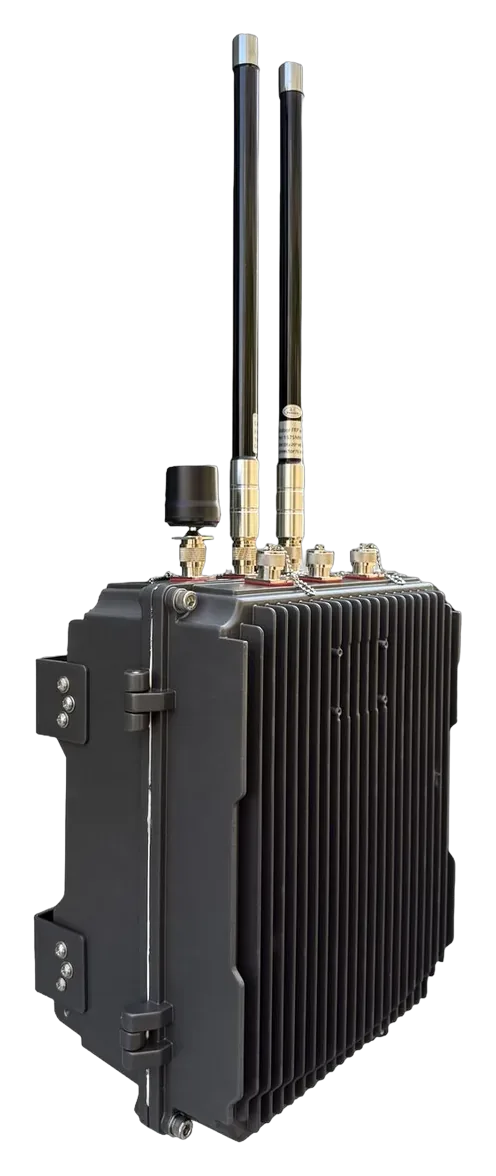
DR200-S1 Fixed Navigation Decoy Device

The DR200-S1 is a fixed GNSS spoofing system designed to protect low-altitude airspace by broadcasting real-time navigation spoofing signals that mislead GPS, BDS, GLONASS, and Galileo-based drones. Through multi-system satellite-signal spoofing and precise directional control, the system creates a stable defense zone that forces unauthorized drones to change course and exit protected areas.

The DR200-S1 fixed GNSS spoofing system creates a controlled navigation environment that safely repels unwanted drones away from protected sites. By using a fixed GNSS spoofing system instead of traditional jamming, operators can guide drones out of the area without causing wideband interference or disrupting surrounding communications.

Built for complex and high-security environments, the system supports eight-directional navigation spoofing modes, enabling zone-based repelling and multi-target interference for up to ten drones simultaneously. The fixed GNSS spoofing system is ideal for prisons, borders, energy facilities, airports, and other locations that require persistent, low-impact drone control and continuous 24/7 airspace security.


With its real-time GNSS spoofing signal generator, the DR200-S1 provides rapid activation in under ten seconds and forms a ≥1 km protection radius that can be customized according to user requirements. Security teams can integrate the DR200-S1 fixed GNSS spoofing system into a larger C-UAS network with radar, RF sensors, or navigation manipulation modules to achieve end-to-end drone defense and full airspace awareness.

Compared with mobile solutions, a fixed GNSS spoofing system offers continuous 24/7 protection for high-value, long-term defense zones where reliability is critical. Its low environmental impact and precise spoofing capabilities ensure effective drone manipulation without affecting non-GNSS users in the area.

Designed with network interfaces and IP66-rated protection, the DR200-S1 supports unmanned operation in harsh climate conditions from –40°C to +70°C, making it suitable for mission-critical deployments in remote, civilian, and military environments.

How It Works

The DR200-S1 continuously regenerates real-time navigation spoofing signals, deceiving the drone’s GNSS receiver by modifying its perceived position. This controlled manipulation enables:

  • Directional repelling (8 azimuths)

  • Full-zone area denial (≥1 km radius, customizable)

  • Multi-target deception (≥10 drones simultaneously)


Its real-time GNSS decoy signal generator achieves onset times of under 10 seconds, delivering immediate anti-drone intervention during security breaches.

Key Features
1. Multi-Frequency GNSS Spoofing

Broadcasts regenerated GPS L1/L2/L5, BDS, GLONASS, and Galileo signals to mislead drone navigation systems.

2. Defense Zone Creation

Forms a ≥1 km airspace denial zone for critical infrastructure, borders, and prisons.

3. Directional Drone Repelling

Supports 8-direction beam shaping for precision drone manipulation.

4. Low Environmental Impact

Operates safely without radio interference to non-GNSS users in the area.

5. Functional Expansion

Provides network interfaces for integration with radar, RF direction-finding, and wider C-UAS networks.

6. Unmanned Operation

Designed for continuous autonomous operation with minimal maintenance.

Applications

The DR200-S1 enables multi-environment navigation denial across:

  • Energy infrastructure (power plants, substations)

  • Airports & aviation perimeters

  • Border checkpoints & coastal defense

  • Prisons & correctional facilities

  • Government buildings & VIP zones

  • Data centers & telecom towers

It is ideal for preventing drone navigation stability during:

FPV flights, waypoint missions, autonomous GNSS navigation, and long-range reconnaissance missions.

Technical Specifications 

From the official spec sheet  :

  • Satellite Systems: GPS, BDS, GLONASS, Galileo

  • Decoy Bands: L1 / L2 / L5 / E1 / B1I / GLONASS L1

  • Activation Time: <10s

  • Targets: ≥10 drones

  • Defense Radius: ≥1 km (customizable)

  • Accuracy: Frequency tolerance <±2×10⁻⁶

  • Power: AC 220V / 50Hz

  • Operating Temp: –40°C to +70°C

  • Protection: IP66

  • Weight: ≤11 kg

Why a Fixed GNSS Spoofing System Is Essential for Drone Defense

A fixed GNSS spoofing system plays a critical role in modern drone defense because it delivers precision GNSS manipulation and controlled satellite-position shifting without causing radio interference. Unlike jamming, which floods the spectrum, spoofing provides a non-jamming drone mitigation approach that uses advanced satellite-signal simulation and location-shift waveform synthesis to subtly override a drone’s navigation logic. By inducing controlled UAV drift and enabling real-time trajectory alteration, the system achieves spoofing-based drone displacement that safely guides drones out of restricted zones.

This technology is essential for defending GNSS-critical zones such as energy facilities, borders, prisons, and sensitive government installations. Through its multi-constellation spoofing engine and high-stability timing synchronization, the system creates an autonomous UAV rerouting mechanism that supports spoofing-enabled perimeter defense. The result is reliable airspace-shielding via spoofing, a passive airspace protection strategy that provides continuous security for high-risk areas without impacting civilian communications or authorized GNSS users.

Trusted By

🌍

Trusted Worldwide

  • Deployed in 25+ countries

  • Used across Asia, Middle East, Africa, South America

  • Trusted by national-level security agencies

  • Selected for critical infrastructure protection programs

DR200-S1 Fixed GNSS Spoofing System – Frequently Asked Questions

The DR200-S1 uses a precision navigation security system rather than RF noise. Instead of overpowering drone receivers, it applies satellite-navigation control intervention, generating controlled GNSS trajectory diversion that guides UAVs away from restricted areas. This non-kinetic UAV displacement method avoids spectrum congestion and interference with other communication systems.

No. The DR200-S1 includes a signal-fidelity override defense mechanism that restricts spoofing effects to a defined, low-altitude operational boundary. This allows the system to apply drone misguidance protection layers without disrupting nearby civilian GNSS devices.

Yes. The device can function within a static UAV redirection infrastructure, integrating with radar, RF direction-finding, sensors, and command-and-control systems. This enables spoof-based drone containment alongside detection, tracking, and alerting modules.

Fixed spoofing systems perform best in strategic sites requiring GNSS-survivability mitigation, such as energy hubs, ports, government compounds, border checkpoints, and correctional facilities. These locations benefit from a spatial-navigation influence module that provides persistent, unmanned airspace protection.


Yes. The system employs GNSS-SDR interference modeling to create satellite-navigation signals across multiple constellations. This enables coordinated drone misrouting and ensures that drones guided by any major GNSS format can be influenced consistently.

When spoofing is activated, the drone experiences autonomous drone path corruption, causing it to follow a manipulated navigation logic. The result is controlled GNSS trajectory diversion, where the UAV is redirected out of the protected area through safe and predictable patterns.

The DR200-S1 uses spoof-resistant UAV countermeasure techniques, such as real-time signal synthesis and multi-constellation manipulation. These features allow it to counter drones equipped with advanced GNSS integrity checks or anti-spoofing firmware.

The DR200-S1 is built with a navigation-stability reinforcement engine that ensures consistent spoofing performance over extended missions. It uses time-synchronized signal orchestration, phase-coherent satellite emulation, and an autonomous spoofing integrity controller to prevent drift or degradation during long-duration broadcasts. This allows the system to sustain a reliable persistent navigation denial field without interruptions, even in harsh environments or high-threat drone activity zones.